
Industrial Pipe Fittings: Types and Applications
Date:
2024-10-19
In industrial piping systems, pipe fittings are essential components that serve to connect, terminate, control, or alter the flow direction of fluids (liquids or gases). Manufactured from a variety of materials such as stainless steel, carbon steel, aluminum, brass, and various plastics, the selection of these materials depends on the application and the type of fluid they will convey. This article provides a professional overview of several common types of industrial pipe fittings and their applications.
**I. Overview of Industrial Pipe Fittings**
Industrial pipe fittings are fabricated from a range of materials, including stainless steel, carbon steel, aluminum, brass, and various plastics. The choice of material is dependent on the specific application and the type of fluid the fittings will handle.
**II. Common Types of Industrial Pipe Fittings**
1. **Elbows**: Used to change the flow direction in the pipe, elbows are available in various angles, most commonly 45, 90, and 180 degrees.
2. **Tees**: These fittings branch the flow into two or more paths. There are straight tees, reducing tees, and lateral tees.
3. **Reducing Tees/Reducers**: These are tees where the size of the pipe reduces from the main run to the branch line, allowing for a change in pipe size.
4. **Couplings**: These are used to connect two pipes or fittings. There are different types, including straight couplings and reducing couplings.
5. **Adaptors**: These fittings are used to connect pipes of different sizes or types, for instance, connecting a plastic pipe to a metal one.
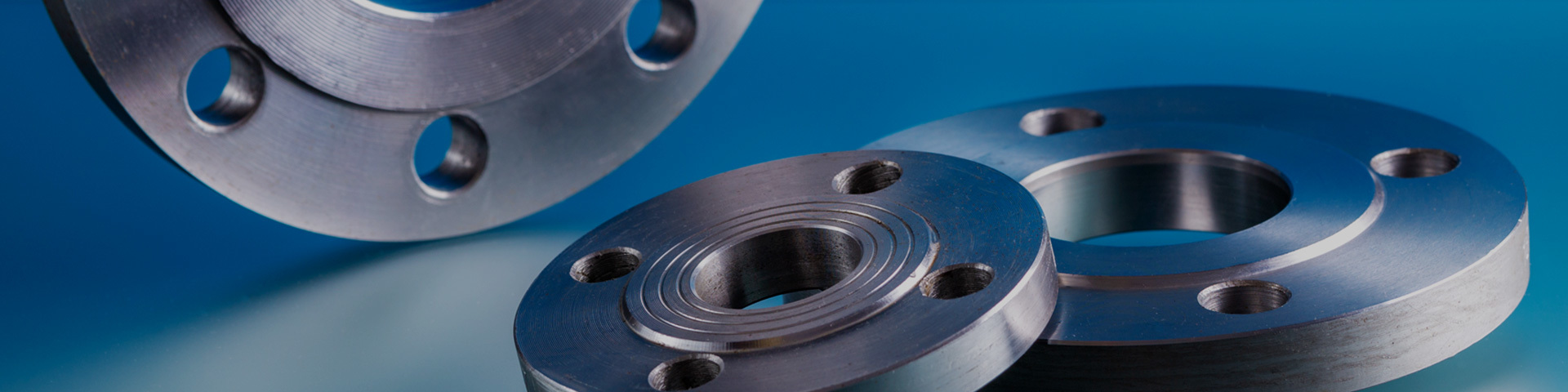
6. **Flanges**: These provide a means to connect or disconnect pipes and equipment without dismantling the entire system. Flanges also allow for the examination of the pipe or for alterations to the pipeline.
7. **Valves**: These control the flow of fluid within the pipe. Types of valves include ball valves, gate valves, globe valves, and butterfly valves.
8. **Nipples**: These are short lengths of pipe or tube used to connect two fittings together.
9. **Unions**: Similar to couplings, unions are used for joining pipes but are designed to allow quick disconnection for maintenance or inspection.
10. **Plugs and Caps**: These are used to close off the ends of pipes or to blank off openings in the system.
11. **Crosses**: These fittings allow for the intersection of four different pipe runs.
12. **Sockets**: These provide an end to a pipe or fitting for insertion of another pipe or fitting.
Key Words:
Related News

PROFESSIONAL MANUFACTURER OF
FLANGES AND PIPE FITTINGS
Sanshi (Hebei) Industry Co., Ltd
Address: Cangzhou Mengcun Hui Autonomous County Hope New Area, Hebei province
Mail: wendy@sanshifitting.com


Copyright © 2023 Sanshi (Hebei) Industrial Co., Ltd